Talks & learning programs
Bring dark sky science to a community gathering, school, astronomy club, conference or retreat. Explore what light pollution is, why the night matters, and how responsible lighting can help.
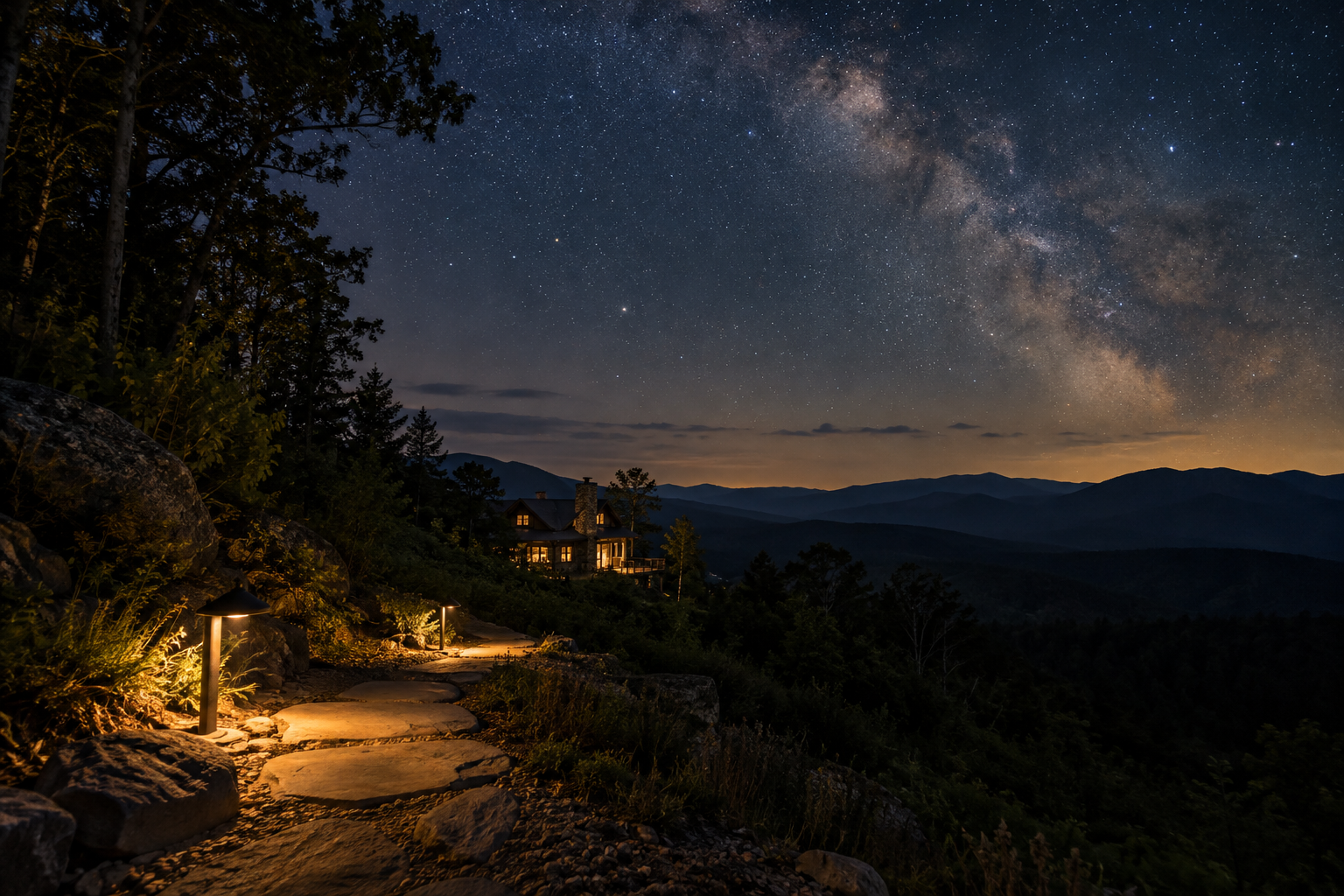
Science. Wonder. A night worth protecting.
Help your community see the night in a new light.
Astronomer, educator and author Stephan Martin brings the science of light pollution into meaningful conversations about our places, our communities and our relationship with the cosmos.
Based in North Carolina · Asheville and Western NC · Discuss programs in other locations
Bring the stars into the conversation
Looking up can be an encounter with wonder, a way to learn astronomy, and an invitation to feel part of a larger story. Artificial light that escapes into the sky can diminish that experience. Light spilling into neighboring spaces and natural habitats raises other questions about how we share the night.
Stephan’s dark sky work builds on more than three decades of astronomy education and public programs. Through talks, discussion and consulting, he helps groups understand light pollution and consider practical ways to protect their connection with the stars.
Start with your purpose: an educational gathering, a conversation about outdoor lighting, or a desire to make dark sky awareness part of your organization’s work.
Meet Stephan Martin
Ways to work together
Programs are shaped around your audience, setting and questions. These are starting points for discussing the right format.
Bring dark sky science to a community gathering, school, astronomy club, conference or retreat. Explore what light pollution is, why the night matters, and how responsible lighting can help.
Clarify your goals and questions about preserving the night. Discuss the principles of responsible lighting, ways to build awareness, and the next conversations your organization needs to have.
Consider pairing education with a guided stargazing experience. Encountering the sky together gives a conversation about protecting it a personal and memorable starting point.
Retreat centers, outdoor education groups, hospitality teams, schools and community organizations may approach the same issue from different perspectives. Share your location, audience and aims so we can discuss a suitable scope. Technical lighting design, electrical work and regulatory decisions call for the relevant qualified professionals.
Try a different approach to the same light
Outdoor lighting decisions involve direction, brightness, color and timing. Explore these choices in a simple illustration, then use the questions below to look at the lights around you.
The illustration shows general principles only. It does not calculate sky brightness, energy use, visibility or safety, and is not a lighting plan. Even shielded light can reflect from the ground; surrounding light sources also matter.
Adapted from the joint guidance of DarkSky International and the Illuminating Engineering Society:
Understand the issue
Artificial light sent upward or sideways can scatter in the atmosphere and brighten the sky. Poorly directed light can also create glare or spill beyond the place it is intended to illuminate. Shielding and directing light downward, and using lower brightness where appropriate, can reduce these effects.
Conditions vary from place to place. Clouds, atmospheric conditions, nearby lighting and natural sources such as moonlight all affect what an observer sees.
Natural cycles of light and darkness are part of the environment in which wildlife live. The National Park Service describes how artificial light at night can alter animal behavior and ecological relationships. Protecting darkness is therefore a conversation about habitat as well as astronomy.
Thoughtful lighting begins with the task and the setting: where light is needed, when it is needed, and how to reduce unnecessary effects on surrounding spaces.
Further reading: NPS: light pollution sources · NPS: the night sky as a natural resource · NPS: natural light in the night sky.
A starting point for your project
For a talk or consultation, a little context makes the first conversation more useful. You do not need a finished plan.
For Asheville and Western North Carolina groups, share the proposed venue and your audience. For projects elsewhere, include your location and whether you are considering an in-person or online conversation; we can discuss availability and the appropriate format.
Start a ConversationQuestions to help you plan
It begins with your goals and questions. Stephan’s focus is dark sky science, education and advocacy: explaining light pollution, discussing responsible lighting principles, and helping groups consider how awareness and public programs can support their aims. A first conversation establishes the scope and any further expertise your project may require.
The service presented here focuses on education and consultation. Lighting calculations, equipment specifications, electrical installation, accessibility requirements and code compliance should be addressed with the relevant qualified professionals. Share your needs so the role of the consultation is clear from the beginning.
No. DarkSky International operates its own recognition and certification programs with their own requirements. A talk or consultation with Stephan does not confer certification or represent approval by DarkSky International. You can read about the International Dark Sky Places application process on DarkSky’s website.
These are good settings for discussing dark sky awareness and responsible lighting. Tell Stephan about your audience, location and purpose so you can explore a suitable talk or consultation. If an experiential element would help, ask about combining the conversation with guided stargazing.
Responsible lighting starts with a useful purpose. The DarkSky / IES principles ask where light is needed, how much is needed, when it should operate, and which color suits the task. The aim is to reduce unnecessary light while addressing the actual needs of the people using a space.
Yes. Include the location, audience, timeframe and preferred format in your enquiry. Travel and remote options can be discussed according to the project and Stephan’s availability.